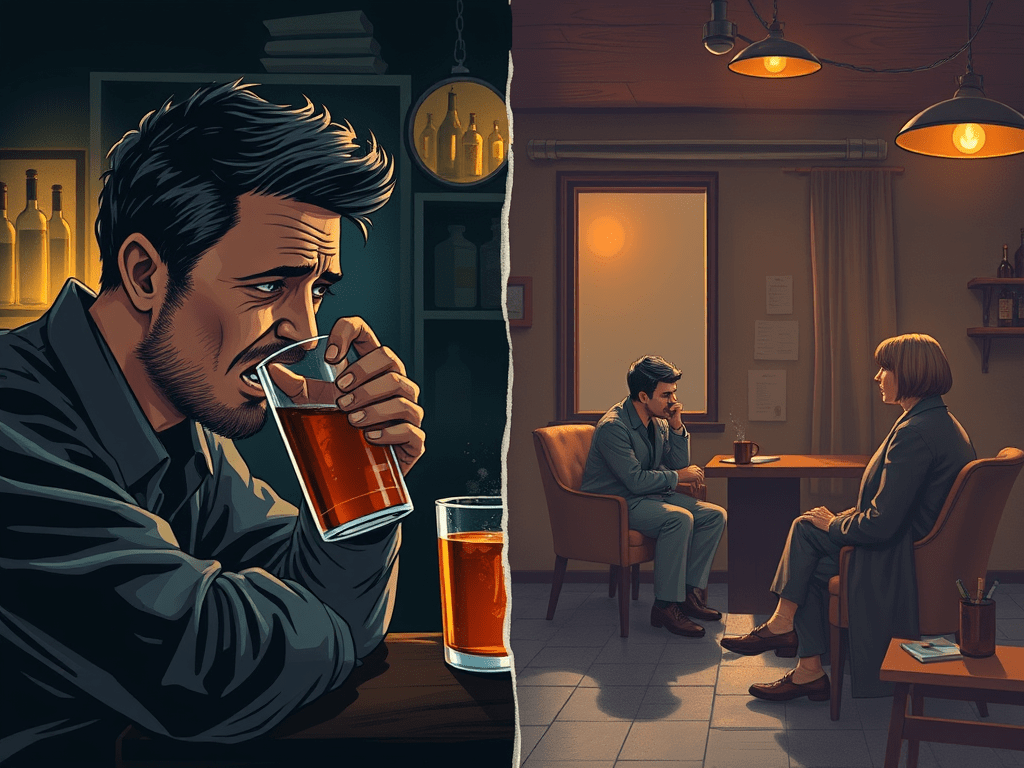
Therapeutic Reflections on the AA Big Book: Step One and the Brain Science Behind Powerlessness

If you’ve ever struggled with addiction—or loved someone who has—you’ve probably heard (or said) the words:

“Why can’t I just stop?”
“Why isn’t willpower enough?”
“I know drinking/drugs are destroying my life… so why do I keep doing it?”

These questions break people emotionally before the substance ever does. They create shame, isolation, and a belief that you’re “weak,” “broken,” or “not trying hard enough.”

Step One of the AA Big Book offers a powerful, liberating reframe:
addiction is not a moral failure—it’s a loss of control rooted in the brain, body, and nervous system.

Today’s blog breaks down Step One—“We admitted we were powerless over alcohol—that our lives had become unmanageable”—and looks at it from both the lens of the AA tradition and modern brain science.


1. What Step One Actually Means (And What It Doesn’t)

Many people misunderstand Step One. They think “powerless” means:

  • “I’m helpless,”
  • “I’m weak,”
  • “I have no control over my life,”
  • “I can’t make choices.”

But Step One is not about helplessness—it’s about honesty.

It’s acknowledging a painful truth:

Once the substance is in the body, the ability to control use is gone.

Powerlessness doesn’t mean you can’t make decisions.
It means you can’t reliably control what happens after the first drink or hit.

This is the turning point where healing starts.


2. The Brain Science Behind “Powerlessness”

AA language was created before neuroscience existed, but the Big Book’s description still lines up with what research shows today.

When someone has a substance use disorder, the brain changes in three key areas:


1. The Reward System (Dopamine)

Substances overstimulate the pleasure pathways by up to 10 times more dopamine than natural rewards like food, connection, or accomplishment.

Over time, the brain becomes rewired to prioritize the substance above all else—even your goals, relationships, and safety.

This is not a conscious choice. It’s conditioning at the neurological level.


2. The Prefrontal Cortex (“The Stop Button”)

This is the part of the brain responsible for:
✅ decision-making
✅ impulse control
✅ planning
✅ resisting urges

Substances weaken this region. This is why people often say things like:

  • “I swore I wouldn’t drink today…”
  • “I don’t even know how I ended up using.”
  • “I meant it when I said I’d stop.”

Their intention was real, but their impaired prefrontal cortex could not follow through.


3. The Stress System (Fight-or-Flight Mode)

When someone tries to quit, the stress and anxiety systems become overactive.
This leads to:

  • irritability
  • restlessness
  • emotional flooding
  • cravings
  • feeling like “I can’t handle life sober”

The substance temporarily soothes this discomfort—so the cycle continues.

This is why Step One is so liberating.
You’re not “crazy.” You’re not “weak.” Your brain is responding exactly as it’s been conditioned.


3. Why Willpower Alone Fails (And Why That’s Okay)

Many clients tell me:

“I should be able to control myself.”
“Other people can drink normally.”
“This is my fault.”

Here’s the truth:
Willpower can’t compete with a brain wired for addiction.

Imagine trying to relax with a fire alarm blaring in your ear.
That’s the internal experience of craving.

Step One is an act of self-compassion:
“My brain is not the enemy. It’s doing what it was conditioned to do.”

You can’t out-discipline a neurological pathway.
But you can retrain your brain with recovery tools.


4. Two Client Examples

Maria: “The Social Drinker Who Isn’t So Social Anymore”

Maria promised herself she’d only have one drink at a birthday dinner.
But once she started, the old pattern kicked in:

  • one turned into six
  • she missed work the next day
  • she felt ashamed and confused

She told me, “I meant it when I said I’d only have one. Why can’t I control myself?”

Step One helped her see the truth:
Her brain doesn’t respond to alcohol like other people’s brains do.


Jason: “The Functional Professional”

Jason held a high-pressure job and believed he could “power through anything.” His drinking escalated during stress. He could stop for a bit, but never stay stopped.

He saw powerlessness as weakness—until we reframed it.
We explored how his brain was conditioned to associate relief with alcohol.

Accepting Step One helped him release guilt and start real healing.


5. Therapy + Step One: A Powerful Combination for Recovery

Step One identifies the problem.
Therapy helps build the solution.

CBT (Cognitive Behavioral Therapy)

Helps clients challenge distorted beliefs such as:

  • “I should be able to control this.”
  • “Relapse means I’m a failure.”

Grounding & Mindfulness

Teaches emotional regulation so clients don’t turn to substances for relief.

Relapse Prevention Planning

Identifies triggers, patterns, and early warning signs.

Motivational Interviewing

Supports clients who feel uncertain about change.

Trauma-Informed Counseling

Addresses the emotional wounds that often fuel addiction in the first place.


6. Step One as a Form of Freedom

Powerlessness sounds scary at first. But in recovery, it becomes liberating.

It means:

  • You’re not the problem.
  • You don’t have to fight this alone.
  • You can let go of impossible expectations.
  • You can stop blaming yourself.
  • There is a proven path forward.

Many clients tell me that Step One was the first time they felt relief instead of shame.


7. Reflection Questions for You

If you’re reading this and exploring recovery, consider:

  • When have I tried to control my use and been unable to?
  • How do my thoughts change when I drink or use?
  • What patterns feel “automatic” and outside my control?
  • What would it feel like to admit I need help—not because I’m weak, but because my brain has been altered?
  • What support could I reach for today?

You don’t have to know the answers yet.
Curiosity is enough.


8. Final Thoughts: You’re Not Broken—Your Brain Is Overwhelmed

Step One isn’t about defeat. It’s about clarity.

Understanding the science behind addiction helps remove shame.
Understanding the spiritual and emotional layers helps rebuild hope.

If you remember one thing from this blog, let it be this:

You are not powerless as a person.
You are powerless over the chemical once it’s in your body.
And recognizing that truth is how recovery begins.


✅ If this topic helped you…

✔️ Leave a comment
✔️ Share with someone in recovery

Therapeutic Reflections on the AA Big Book: Understanding The Doctor’s Opinion

When people first open the AA Big Book (4th Edition), many skip over The Doctor’s Opinion, not realizing that this short section contains one of the most important foundations for understanding addiction. As a mental health counselor who specializes in substance use, I’ve seen how powerful this section becomes when we explain it in modern language.

If you’re in recovery, supporting a loved one, or simply curious about why addiction is so complex, this blog breaks down the key ideas in simple, compassionate, and science-informed language.

This post is part of an ongoing series where I read the AA Big Book and share insights from both the book and the counseling world.


✅ What The Doctor’s Opinion Actually Says

The Doctor’s Opinion was written by Dr. William Silkworth, one of the early physicians who treated people with alcohol addiction. His central message is this:

👉 People with addiction react differently to alcohol than people without addiction.
When they take the first drink, something triggers — what he called a “phenomenon of craving.”

This idea was groundbreaking for its time. Instead of blaming addiction on “weakness,” Silkworth saw it as a medical condition involving two parts:

1. A Physical Allergy (the body reacts differently)

When someone with alcohol addiction drinks, they don’t experience a normal response.
They experience:

  • Craving
  • Loss of control
  • Compulsion to continue

Today, neuroscience confirms this. Alcohol impacts the reward system, dopamine pathways, and the prefrontal cortex — the part of the brain responsible for decision-making.

2. A Mental Obsession (the mind keeps bringing them back)

Even when someone desperately doesn’t want to drink, their mind pushes them toward it.
This mental obsession is:

  • intrusive
  • persistent
  • irrational
  • overwhelming

The AA Big Book describes it as a loop that feels impossible to break alone.

Silkworth wrote:
“…the patient is completely unable to bring into consciousness with sufficient force the memory of the suffering and humiliation of even a week or a month ago.”

Modern psychology calls this “state-dependent memory” — when cravings rise, logic and consequences feel distant or invisible.


✅ How This Relates to Clients Today

In therapy, I hear versions of Dr. Silkworth’s description all the time:

  • “Once I start, I don’t stop.”
  • “I don’t know why I picked up — I told myself I wouldn’t.”
  • “I forgot how bad it was.”
  • “It’s like a switch flips.”

These statements are not character flaws — they’re symptoms of a real condition that affects both the body and the brain.

This is why guilt and shame are so heavy in addiction.
People blame themselves for something the brain literally hijacks.

Understanding this helps clients release the belief that they are “broken,” “weak,” or “hopeless.”


✅ Why Willpower Alone Doesn’t Work (And Was Never Meant To)

One of the biggest myths in recovery is the idea that people simply need stronger willpower.
But The Doctor’s Opinion makes it clear:

👉 Addiction lives in the parts of the brain that willpower can’t access during cravings.

When cravings are activated:

  • impulse control decreases
  • emotional reasoning takes over
  • the brain prioritizes relief over logic

This is why strategies like “just say no” or “try harder” don’t work for someone with addiction.

It’s also why AA’s structure emphasizes community, support, and spiritual or mental grounding.

And it’s why therapy focuses on:

  • coping skills
  • grounding practices
  • cognitive restructuring
  • relapse prevention
  • emotional regulation
  • accountability

Recovery requires tools, not force.


✅ A Client Example

To protect privacy, this example is a blend of several clients.

“James” came to treatment saying, “I don’t understand myself. I’m educated, I have a job, I have kids. Why can’t I stop?”

He could go a week or two without drinking, but every relapse looked the same:

  1. Stress at work
  2. Feeling overwhelmed
  3. “Maybe one drink won’t hurt”
  4. A two-day binge

He blamed himself every time.
But after reading The Doctor’s Opinion, something clicked:

“It’s not that I’m weak. My brain reacts differently.”

This reframe allowed him to step out of shame and into action — something I see again and again.

When clients understand the nature of addiction, recovery becomes less about beating themselves up and more about working with their brain instead of against it.


✅ What Modern Science Adds

Even though AA was written decades ago, much of The Doctor’s Opinion aligns with what we now know about addiction, including:

Dopamine hijacking

Alcohol floods the brain with dopamine, reinforcing the behavior.

Conditioned responses

Certain environments trigger cravings automatically.

Impaired prefrontal cortex

Decision-making is compromised during cravings, especially in early recovery.

Stress response sensitivity

People with addiction often have overactive stress systems, making substances feel like relief.

The Big Book’s early insights are now supported by MRI studies, neurobiology, and trauma research.


✅ Practical Tools: What You Can Do With This Information

1. Practice “The Pause”

Before drinking, using, or acting on impulse:
Stop → Breathe → Name the feeling → Choose intentionally.

Even 10 seconds can interrupt the craving spiral.

2. Build a Trigger List

Know your top 5 triggers.
Common ones include:

  • loneliness
  • stress
  • conflict
  • boredom
  • celebrations
  • certain people

Awareness = prevention.

3. Create a Support Plan

Recovery is not meant to be done alone.
Include:

  • a meeting
  • a sponsor or mentor
  • one sober friend
  • a therapist
  • one daily routine

4. Use “Replacement Rituals”

Alcohol becomes a ritual — so create new ones:

  • tea instead of wine
  • walk instead of drink
  • breathwork before bed
  • journaling to release stress

Small rituals create big change.


✅ Final Thoughts

If you’ve ever wondered why you drink when you don’t want to, or why stopping feels impossible after the first drink, The Doctor’s Opinion offers compassion and clarity.

Addiction is not a moral failure — it’s a condition that needs support, structure, and healing.

In this blog series, I will continue reading the AA Big Book (4th Edition) and breaking down each section with tools, insights, and real-life applications. My hope is that this makes the journey feel less overwhelming and more empowering.


✅ If this topic helped you…

✔️ Leave a comment
✔️ Share with someone in recovery