
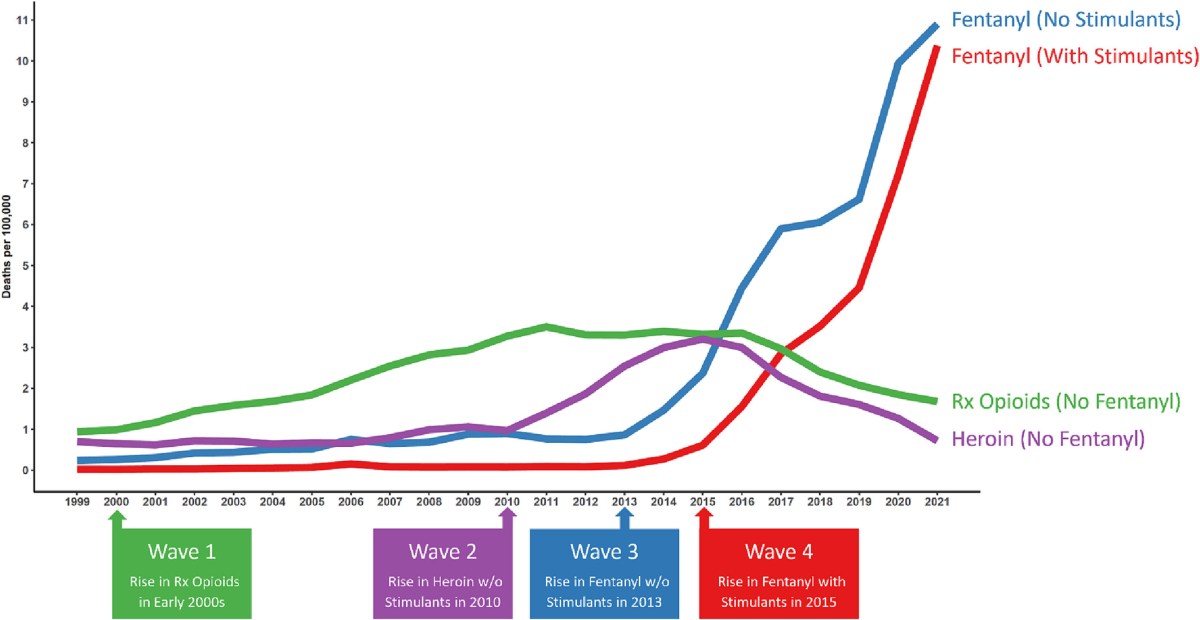
In recent years, the opioid crisis has taken center stage in the public health and policy discussions, with its devastating impact on communities across the globe. This crisis is often described as having four distinct waves, each marked by unique challenges and consequences1. Understanding these waves is not only crucial for addressing the ongoing crisis but also for preventing similar crises in the future. Join us as we ride the waves of the opioid crisis, delving into each phase to gain insight into the complexities of this deeply concerning issue.
Wave 1: The Prescription Painkiller Wave (Late 1990s to early 2000s)
The first wave of the opioid crisis began in the late 1990s. It was characterized by the over-prescription and aggressive marketing of opioid pain medications, often containing substances like oxycodone and hydrocodone. According to the Center of Disease and Control (CDC) prescription opioid sales in the United States quadrupled from 1999 to 20102. At this stage, the medical community believed that opioids were an effective solution for managing pain, especially after surgeries or injuries. Unfortunately, this belief led to an overabundance of prescription opioids, ultimately giving rise to a new wave of opioid addiction. This wave laid the foundation for the subsequent waves of the opioid crisis.
Wave 2: The Heroin Wave (Mid 2000s to mid 2010s)
By the mid-2000s, the consequences of over-prescription became painfully evident. Many individuals who had become addicted to prescription opioids found themselves unable to obtain legal prescriptions or facing the high costs of these medications. This situation led to a shift to a more affordable and accessible alternative – heroin. Heroin-related deaths began to increase as people turned to this illicit drug due to the difficulty of obtaining prescription opioids. Wave two saw a sharp increase in heroin use and a corresponding surge in overdose deaths. This wave was marked by the desperation of individuals caught in the grip of addiction.
Wave 3: The Synthetic Opioid Wave (Mid 2010s to present)
As law enforcement and healthcare providers began to respond to the second wave, another crisis was looming on the horizon. The third wave of the opioid crisis introduced synthetic opioids like fentanyl. Fentanyl is extremely potent and often manufactured in clandestine labs, leading to an alarming spike in overdose deaths. Fentanyl is often mixed with other drugs, making it extremely dangerous. Its presence in the illicit drug market has made it a deadly addition to the opioid crisis, causing significant challenges for harm reduction efforts and public health officials. This wave marked an intensification of the opioid crisis in terms of fatalities.
Wave 4: The Polydrug Wave (Late 2010s to present)
As overdose deaths rose in the United States from over 30,000 in 2010 to over 105,000 in 2021, the percent involving both fentanyl and stimulants concurrently rose thirty fold marking the next wave. The fourth and most recent wave of the opioid crisis is marked by an increasingly complex trend of polydrug use (using more than one drug at a time). In this wave, individuals are not only using opioids but often combining them with other substances, such as stimulants like cocaine or methamphetamine. The use of multiple drugs creates a dangerous concoction that poses even greater risks to users and complicates treatment and prevention efforts. This phase also showcases the evolving nature of addiction and the need for adaptable, multifaceted approaches. Polydrug use has led to an even higher risk of overdose, as the interactions between different substances can be unpredictable and deadly.
Navigating the Opioid Crisis
As we reflect on the four waves of the opioid crisis, it’s essential to remember that behind each statistic and wave, there are real people and real families impacted. Understanding the four waves of the opioid crisis is crucial for healthcare professionals, policymakers, and society as a whole. It sheds light on how the opioid epidemic evolved and highlights the need for comprehensive, evidence-based strategies to combat it. While significant strides have been made in recent years to address the crisis, there is still much work to be done. Prevention, harm reduction, access to treatment, and addressing the root causes of addiction are all key components of a multi-pronged approach.
It’s important to note that the opioid crisis is a dynamic and ongoing issue, and the data for each wave continues to evolve. Riding the waves of the opioid crisis is a daunting task, but it’s one that we must undertake collectively. By recognizing the nuances of each phase and learning from the past, we can work towards a future where the devastating impact of opioid addiction is minimized, and individuals can find hope, support, and recovery.
Will you be a part of the solution? How will you contribute to ending the opioid crisis and supporting those affected?
- Four waves of overdose mortality. A simplified schema of the four waves of the United States overdose mortality crisis. Waves 1 and 2 are represented by deaths involving commonly prescribed opioids and heroin, respectively. Synthetic drugs, like fentanyl, represent the key driving factor in wave 3 and 4. Data were obtained from Centers for Disease Control and Prevention’s Wide-Ranging Online Database for Epidemiologic Research. ↩︎
- https://www.cdc.gov/mmwr/preview/mmwrhtml/mm6043a4.htm#:~:text=Sales%20of%20OPR%20in%202010,person%20in%20the%20United%20States. ↩︎

 Counseling Carmen